Olubadan of Ibadanland Biography: Life Story of Oba Rashidi Adewolu Ladoja the 44th Ruler

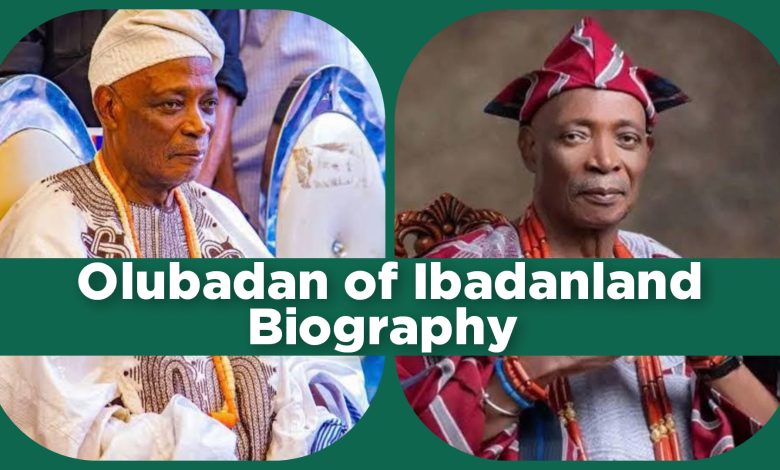
His Imperial Majesty Oba Rashidi Adewolu Akanmu Ladoja, known as Arusa I, stands as the 44th Olubadan of Ibadanland. Born into a respected Ibadan family and shaped by education abroad, a career in industry, high political office, and decades of steady progress through the city’s unique chieftaincy ranks, he embodies a rare blend of modern achievement and deep traditional roots. His ascension on 26 September 2025 at Mapo Hall marked both a personal milestone and a continuation of one of the most orderly and non-hereditary royal systems in Yorubaland.
Oba Rashidi Adewolu Ladoja Early Life
Oba Rashidi Adewolu Ladoja was born on 25 September 1944 in Gambari, a community linked to Ibadan in what is now Oyo State, Nigeria. He is a Nigerian of Yoruba heritage. His father, Alhaji Aruna Ladoja, worked as a cocoa trader, while his mother, Alhaja Haleemat Ladoja, was active in community life. The family traces its ancestral homestead to the Arusa compound in Isale-Osi, Ibadan.
Ibadan itself rose as a major Yoruba settlement in the nineteenth century after earlier foundations, developing a distinctive social and military character that later shaped its kingship system. Growing up in this environment, young Ladoja absorbed values of enterprise, communal responsibility, and patience that would later guide both his business and traditional paths. His early years were spent in the Gambari and wider Ibadan area, where trade, farming, and community ties formed the daily fabric of life.
Oba Rashidi Adewolu Ladoja Education
He began formal schooling in Ibadan and later attended Ibadan Boys’ High School. He continued at Olivet Baptist High School, where he prepared for higher studies. On scholarship he proceeded to the University of Liège in Belgium and earned a degree in chemical engineering, completing his studies in the early 1970s.
This scientific training equipped him with analytical habits and international exposure. Fluency in French and familiarity with European industrial practices broadened his outlook long before he returned to Nigeria to begin professional work.
Oba Rashidi Adewolu Ladoja Professional Career
After graduating, Ladoja joined Total Nigeria, where he worked for thirteen years in various technical and managerial roles within the oil sector. In 1985 he left paid employment to build private businesses. His interests expanded into shipping, manufacturing, agriculture, banking, and related fields. By the early 2000s he had served as a director of Standard Trust Bank Limited.
These ventures established him as a capable entrepreneur who understood both technical operations and commercial strategy. The same disciplined approach later supported his public service and his long climb through the traditional hierarchy.
Oba Rashidi Adewolu Ladoja Political Career
Ladoja entered elective politics during Nigeria’s short-lived Third Republic. He served as Senator representing Oyo South from 1992 to 1993. After the return to civilian rule he contested and won the governorship of Oyo State on the platform of the Peoples Democratic Party, taking office in 2003.
His tenure was marked by political turbulence. In January 2006 he was impeached by the state House of Assembly amid conflict with powerful local interests. Courts later nullified the impeachment, and he returned to office in December 2006 to complete his term in 2007. He remained active in subsequent years, contesting further elections under different platforms and maintaining a presence in Oyo State affairs. His political experience gave him a practical understanding of governance, negotiation, and the interplay between traditional institutions and modern state structures.
Oba Rashidi Adewolu Ladoja Entry into Traditional Leadership
Ibadan’s kingship system differs sharply from many other Yoruba monarchies. The Olubadan title is not hereditary within a closed royal family. Instead, any qualified male indigene may begin the journey by becoming Mogaji, the head of his family compound. From there he enters one of two parallel lines: the Otun (civil or Egbe Agba) line or the Balogun (military) line. Each line contains more than twenty graded titles. Promotion occurs only when a vacancy arises through death or elevation, and the throne itself rotates between the two lines.
Ladoja was installed as Mogaji of the Arusa family compound. On 1 October 1993 he received the title of Jagun Olubadan, the entry point on the civil line, from the then Olubadan. Over the following decades he advanced steadily through the ranks as senior chiefs passed on. The process demands patience measured in decades rather than years. By the time a chief reaches the highest positions on his line he has usually spent thirty or more years in traditional service and has acquired deep knowledge of Ibadan’s customs, land matters, and community expectations.
Oba Rashidi Adewolu Ladoja Rise to Otun Olubadan and Ascension
In 2024, following the coronation of the 43rd Olubadan, Ladoja was elevated to Otun Olubadan, the most senior title on the civil line and the position next in rotational order for the throne. He accepted the ceremonial beaded crown associated with that rank. When the 43rd Olubadan, Oba Akinloye Owolabi Olakulehin, passed away on 7 July 2025 after a brief reign, the civil line’s turn had come.
The Olubadan-in-Council nominated Ladoja without recorded dissent. Oyo State Governor Seyi Makinde formally approved him as Olubadan-designate. Traditional rites, including the presentation of the Akoko leaf, preceded the public ceremony. On 26 September 2025, one day after his eighty-first birthday, he was crowned the 44th Olubadan of Ibadanland at Mapo Hall. The event drew dignitaries from across Nigeria and affirmed the continuity of a system that has produced forty-four rulers since the early nineteenth century.
Oba Rashidi Adewolu Ladoja Role as Olubadan and Early Reign
The modern Olubadan exercises largely ceremonial and cultural authority while remaining a central symbol of unity for Ibadanland. He presides over the Olubadan-in-Council, guides the elevation of chiefs in both lines, and serves as a moral and traditional reference point for the city and wider Oyo State. In his first year on the throne Ladoja has performed the customary duties of installing and promoting high chiefs, receiving visitors, and speaking on matters of community welfare and peaceful coexistence. He has urged restraint in political campaigns and emphasised prayer and thanksgiving over elaborate celebration on personal anniversaries.
Ibadan remains Nigeria’s largest indigenous city, and the Olubadan stool continues to represent the city’s warrior origins, its commercial energy, and its capacity for orderly succession.
Oba Rashidi Adewolu Ladoja Personal Life and Family
Oba Ladoja is married and is a father and grandfather. Public records identify Alhaja Mutiat Olayinka Ladoja among his spouses; she has been involved in community and social activities. The family maintains ties to the Arusa compound and the broader Ibadan community. His personal style is described by observers as patient and measured, consistent with the long apprenticeship required by the chieftaincy system.
Oba Rashidi Adewolu Ladoja State of Origin and Cultural Context
Oyo State, and specifically the historic city of Ibadan, forms the geographic and cultural heart of his identity. Ibadan developed in the nineteenth century as a powerful military and commercial centre after the collapse of the old Oyo Empire. Its founders and early leaders established a republican-style hierarchy that later evolved into the dual-line Olubadan system formalised in the twentieth century. The title “Olubadan,” meaning Lord of Ibadan, replaced the earlier designation of Baale in 1936. Today the institution preserves Yoruba customs while adapting to contemporary Nigeria. Ladoja’s life story therefore connects personal achievement with the collective history of one of the most important traditional stools in southwestern Nigeria.
Oba Rashidi Adewolu Ladoja Awards and Recognition
While specific national medals are not the primary markers of his public life, Ladoja has received recognition for resilience in the face of political adversity and for service to democratic processes. In 2023 he was honoured by a research centre as an “Unsung June 12 Hero” in acknowledgment of his quiet support for democratic struggles in the 1990s. His elevation through the traditional ranks and eventual coronation themselves constitute the highest form of recognition within Ibadanland.
Conclusion
The life of Oba Rashidi Adewolu Ladoja illustrates how individual preparation, professional success, political experience, and patient traditional service can converge in one of Nigeria’s most distinctive monarchies. From a childhood in Gambari and Isale-Osi, through engineering studies in Belgium, corporate work, governorship of Oyo State, and more than three decades on the chieftaincy ladder, he has reached the Olubadan stool at an age when many others have long retired. His reign continues a succession system that prioritises seniority, service, and rotation rather than pure heredity. For residents of Ibadanland and observers of Yoruba culture, his story offers both a personal biography and a living example of institutional continuity.
FAQs
Who is the current Olubadan of Ibadanland?
Oba Rashidi Adewolu Ladoja, also known as Arusa I, is the 44th Olubadan of Ibadanland. He was crowned on 26 September 2025.
When was Oba Rashidi Adewolu Ladoja born?
He was born on 25 September 1944 in Gambari, Ibadan, Oyo State, Nigeria.
How does succession to the Olubadan throne work?
Succession is non-hereditary and rotational between two parallel lines of chiefs, the Otun (civil) line and the Balogun (military) line. A man begins as Mogaji of his compound, enters one line as Jagun, and advances by seniority as vacancies occur. The throne alternates between the two lines.
What was Oba Ladoja’s profession before becoming Olubadan?
He trained as a chemical engineer, worked for thirteen years with Total Nigeria, and later built private businesses in shipping, manufacturing, agriculture, and banking. He also served as a senator and as governor of Oyo State.
Where did the coronation of the 44th Olubadan take place?
The formal coronation and presentation of the staff of office occurred at Mapo Hall in Ibadan on 26 September 2025.
Why is the Olubadan system considered unique among Yoruba monarchies?
Unlike many stools that pass within defined royal families, the Ibadan system is open to any qualified male indigene who rises through a long graded hierarchy of more than twenty titles in either the civil or military line. The process usually takes decades and produces experienced, senior leaders.